
7 Small Habits to Boost Your Mental Wellbeing
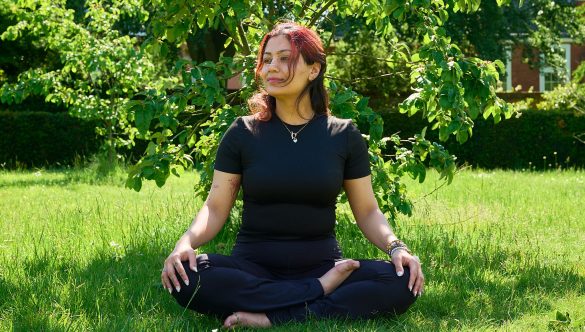
A former City Year mentor who served at The Blue Coat Church of England School in Coventry in 2021–22, Aastha now works in healthcare and recently qualified as a yoga teacher. In this piece for Mental Health Week, she reflects on the challenges surrounding mental health and wellbeing, and the small habits that can make a big difference over time. Whether it’s taking a shower, caring for a plant or stretching for ten minutes, these simple actions can help boost your mood and support your wellbeing. Read more below.
We all have mental health, both good and bad. In a very general sense, we should look after it in exactly the same way we look after our physical health, or perhaps even more. I’m sure all of us have experienced difficult moments with our mental health, and hopefully, we have found our way through them one way or another.
The thing about depression is that it creeps in during the most unexpected moments and then disappears just as suddenly. I like to call these moments my “episodes,” and I experience them quite often. A few months ago, I found out one reason they happen so frequently is because I also have EUPD. It is definitely as complicated as it sounds.
Mental health became a much bigger part of my life over the past few years after being diagnosed with depression, OCD, and EUPD. Since then, I have had to learn how to manage difficult days while still balancing work, responsibilities, and everyday life. Some days are harder than others, and sometimes even the smallest task can feel overwhelming.
Working in healthcare can make that even harder. Healthcare workers spend so much time caring for other people that we often forget to care for ourselves. We become used to long shifts, emotional exhaustion, and putting our own needs aside because somebody else needs us more. Over time, that can slowly take a toll on our mental health without us even realising it.
I came to understand that coping is not always about huge lifestyle changes or perfect routines. More often, it is about small habits, small comforts, and finding realistic ways to support yourself, especially on the days when motivation is low.
These are some of the things that have genuinely helped me:
1. Get Just One Task Done 
Because of my OCD, I have always been very particular about cleanliness. No matter how late I am running, I never leave the house without showering. However, there have been days when taking a shower was the biggest, and the only, task I managed to complete.
On those days, I stopped expecting too much from myself and instead celebrated that one achievement. I gave myself credit simply for getting into the shower. Sometimes, one small task is enough.
That task could be brushing your teeth, making your bed, tying your hair up, or eating something small. Usually, one thing naturally leads to another. For me, showering often meant tidying up a little afterwards, drinking a glass of water, or remembering to take my medication. Small steps still count as progress.
 2. Buy a Plant and Care for It
I genuinely mean it. A few months ago, I bought two plants, but unfortunately, both of them died. For a long time afterwards, I kept thinking about getting another one, but it felt like too much responsibility. My thought process was always: “Some days I can barely look after myself, so how am I supposed to look after a plant?”
Then, a few days ago, on a sunny day when I was feeling a little better, I bought one anyway. And honestly, I now look after her more than I look after myself. I make sure she gets enough sunlight, I water her carefully, and I even give her a little kiss at least twice a day.
Watching her slowly bloom by my window has somehow helped me bloom a little too. Caring for something living, no matter how small, has given me a sense of routine, comfort, and responsibility in a very gentle way.
 3. Move Your Body
Yes, the total cliché.
But I would say: find a type of movement that works for you and stick to it. Jumping in one place to release endorphins? Sure, why not. Walking, stretching, dancing in the kitchen while cooking, whatever it may be, find your movement and make it yours. Even if it is only ten minutes a day, it still counts.
When you work in healthcare, your body often feels physically exhausted already, which can make exercise feel impossible. But movement does not always have to mean intense workouts or going to the gym. Sometimes, it simply means reminding your body that it deserves care too.
 4. Make Your Life Accessible
One of the best things I ever did for myself was accept that I have different needs.
Working in healthcare while trying to care for your own mental health is not easy, especially when your job already revolves around caring for everyone else. Because of that, I started making my life more accessible in small ways instead of forcing myself to function like everybody else. I keep resistance bands with different weight levels for days when I cannot face going to the gym.
I buy juices I actually enjoy instead of forcing myself to drink smoothies just because everyone else says they are healthy. My room is laid out in a way that means, even after a long shift, I have enough soft lighting without needing to turn on the main lights.
These things sound small, but they make a huge difference. We often underestimate how much easier life feels when we stop fighting against ourselves and start supporting ourselves instead.
 5. Find Your Aroma
A slightly unusual one, but I stand by it.
I realised certain smells genuinely affect my mood. Whether it is a candle, perfume, essential oil, clean bedsheets, coffee, or the smell of skincare after a long shift, certain scents can feel grounding and comforting.
Healthcare environments can often feel clinical, stressful, and overstimulating. Sometimes, having one familiar smell at home can help signal to your brain that you are safe, calm, and allowed to rest.
 6. Let Yourself Do Nothing
Allow yourself to rest without feeling guilty or without having to “earn it.” We live in a culture that treats rest as a reward, but you do not have to be exhausted to deserve rest.
Let yourself actually rest. Lie down, sit outside, stare at the ceiling intentionally, and, as I like to call it, have a rot day: order a tub of Ben & Jerry’s, put on a good film, and spend the whole day in bed.
Rest is not laziness. It is giving your nervous system a chance to relax and reset, and you do not need to justify it.
 7. Find Your Sky
I was quite young when I started stargazing and found it very comforting. I always believed that when people leave this world, they go somewhere up there.
When my grandad passed away a few months ago, stargazing became something I started doing every day. I step outside, find the sky, and just talk to him, sometimes just a few words, sometimes nothing at all, just looking.
There is something about standing beneath something so vast that makes the noise in your head go quiet. Not because anything is fixed, but because suddenly you feel very small, and somehow that is a relief.
Find your sky, whatever that means for you, the sea, the horizon, a window at 2 a.m. Find the thing that reminds you that you are part of something much larger than whatever is crushing you today. For me, it is the stars. I like to place myself in front of something bigger than my thoughts.
Mental health is not something that disappears once you “fix” it. Some days are easier than others, and some days survival itself feels like an achievement. But I think Mental Health Week and other similar awareness days are a reminder that struggling does not make us weak, and needing support does not make us incapable, especially in healthcare, where so many of us spend our lives caring for others while silently neglecting ourselves.
I am still learning how to manage my mental health every day. Some days I do it well, and other days I do not. But I have learned that healing is not always dramatic. Sometimes it looks like taking a shower, watering a plant, stretching for ten minutes, or simply making your environment softer to exist in.
And honestly, sometimes that is more than enough.
You can find more of Aastha’s reflections on her Medium.